In today’s digital world, businesses are on a quest to create customer experiences that feel as familiar and personal as the one you get in a local coffee shop, where you only get to say “the usual please”. At the recent [event] in Kaunas Aybüke Karabacak, a Solution Consultant at SALESmanago, shared insights on how businesses can leverage hyper-personalization to transform their customer interactions. Here are the key takeaways.
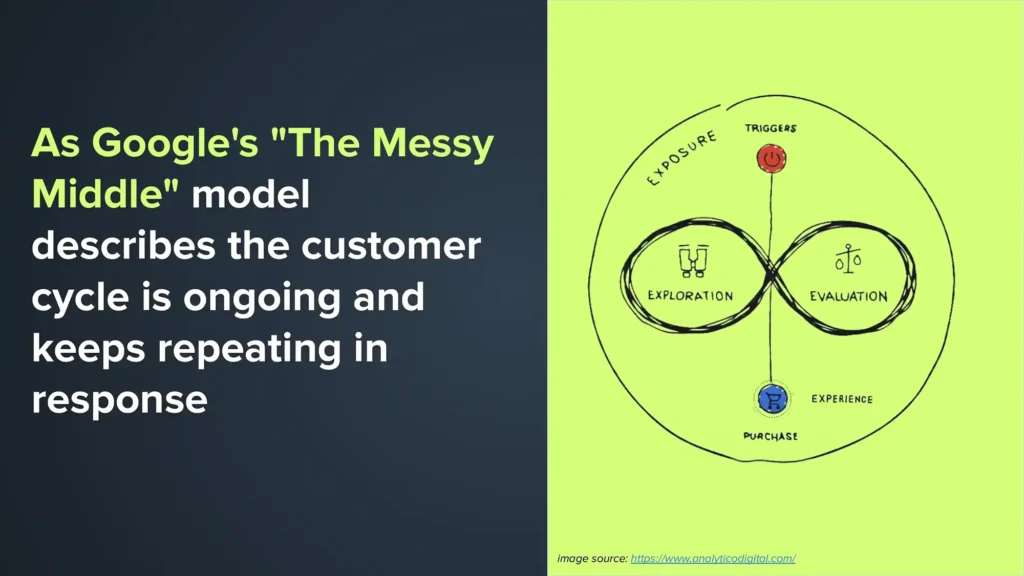
The traditional marketing model paints a clear-cut path – awareness, consideration, purchase, and so on. But Aybüke argues that today’s customer journeys are anything but linear. Digital consumers bounce around, often skipping stages entirely. Imagine seeing an influencer’s post and buying the product right away – that’s bypassing awareness and consideration altogether! Google’s “Messy Middle” model captures this complexity perfectly. It describes a continuous loop where customers explore and re-evaluate options before making a decision. This messy journey makes pinpointing the right moments for personalization crucial to guiding customers towards conversion.
These terms get thrown around, but they’re not the same. Traditional personalization might use basic info like age or gender. Hyper-personalization goes way beyond that. It leverages real-time data, AI, and machine learning to create a rich, dynamic understanding of each customer.
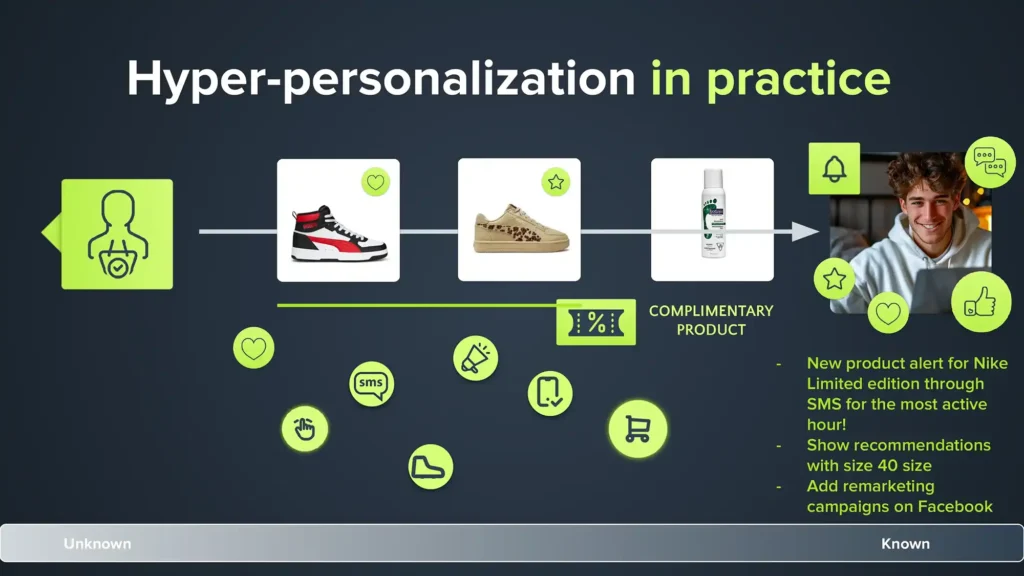
For example, imagine you know a customer named Thomas: he favors Nike shoes, prefers SMS updates, and last visited your site after seeing a Facebook ad. With this level of detail, you can craft highly targeted messages. Maybe you send him a text about limited-edition Nikes through his preferred channel. This personalized approach resonates more deeply with customers.
We can help you manage and advise on every aspect of your business’s digitalization.
Do what’s best for your business and take action!
Data is the new oil. Solutions based on Machine Learning and Artificial Intelligence allow you to optimize conversion, but training algorithms require data. AI-based tools can perform various tasks: segment customers and provide them with customized offers, optimize prices and spot suspicious transactions. So, the future is in customer data and AI-based solutions with scalable eCommerce platform, like PrestaShop.
So, if you are thinking about your retail digital commerce business boost and need to know how AI can help your business, contact Invertus, and our advisors will provide more information. At Invertus, we enable digital commerce for businesses that want to scale and cross borders. Contact us, and let’s discuss how we can help your business thrive.
Some Real-life examples of Hyper-Personalization may be:
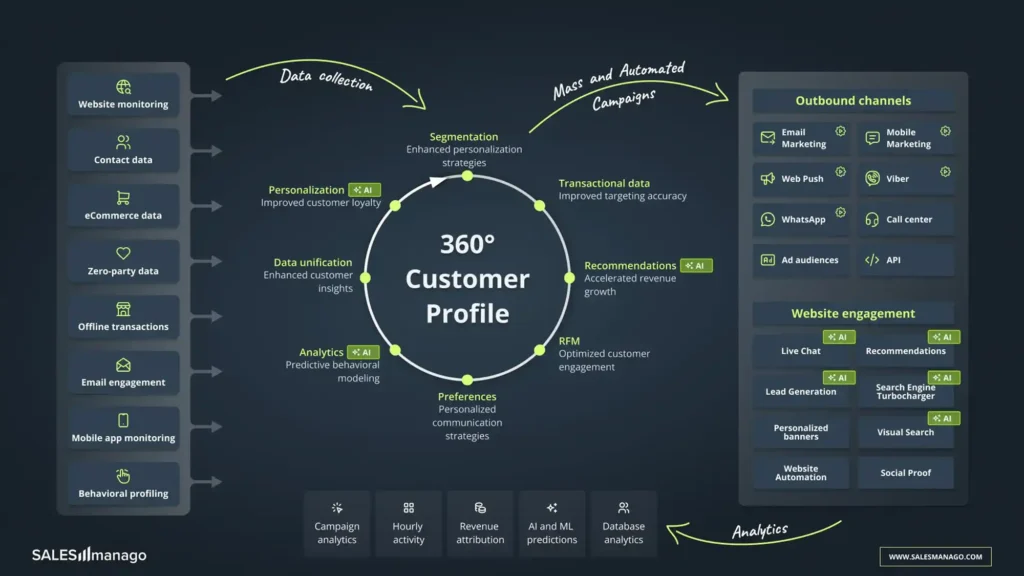
To effectively implement hyper-personalization, Aybüke emphasized the need for a strategic approach because, at the end of the day, we’re not going to implement 50 customer journeys. We need to first decide which kind of strategy we should drive. Am I selling perfumes that people will buy when they run out? In that case, I can focus on refill campaigns, proactively reminding customers about similar fragrances or the same product through emails. Or am I selling fashion items with different categories like t-shirts, shirts, dresses, and accessories? If so, when a person buys an item, I can activate campaigns for complementary products like accessories. Or let’s say we are operating in the home & furniture industry, how can I reduce the basket abandoned rate because each item has a high value and it is more crucial for us to focus on abandoned carts compared to other industries. After deciding on strategy, 3 main steps needs to be completed to make a hyper personalized approach a success:
Frisco.pl: This online grocery leader from Poland saw a significant increase in engagement by personalizing email content based on purchase history.
Subdued: By implementing the Customer Preference Center, they identified that a small but loyal customer segment generated a substantial portion of their revenue.
Borgione: This brand created a connected journey through various channels, demonstrating the importance of cohesive and personalized communication.
In a world where customer expectations are higher than ever, businesses must adopt hyper-personalization to stay competitive. By understanding the chaotic nature of modern customer journeys and leveraging detailed data, companies can create meaningful and effective personalized experiences. As Aybüke aptly put it, while content may be king, data is the queen that drives successful personalization strategies. Hyper-personalization is not just a trend but a necessity for businesses aiming to forge deeper connections with their customers and drive long-term growth.